
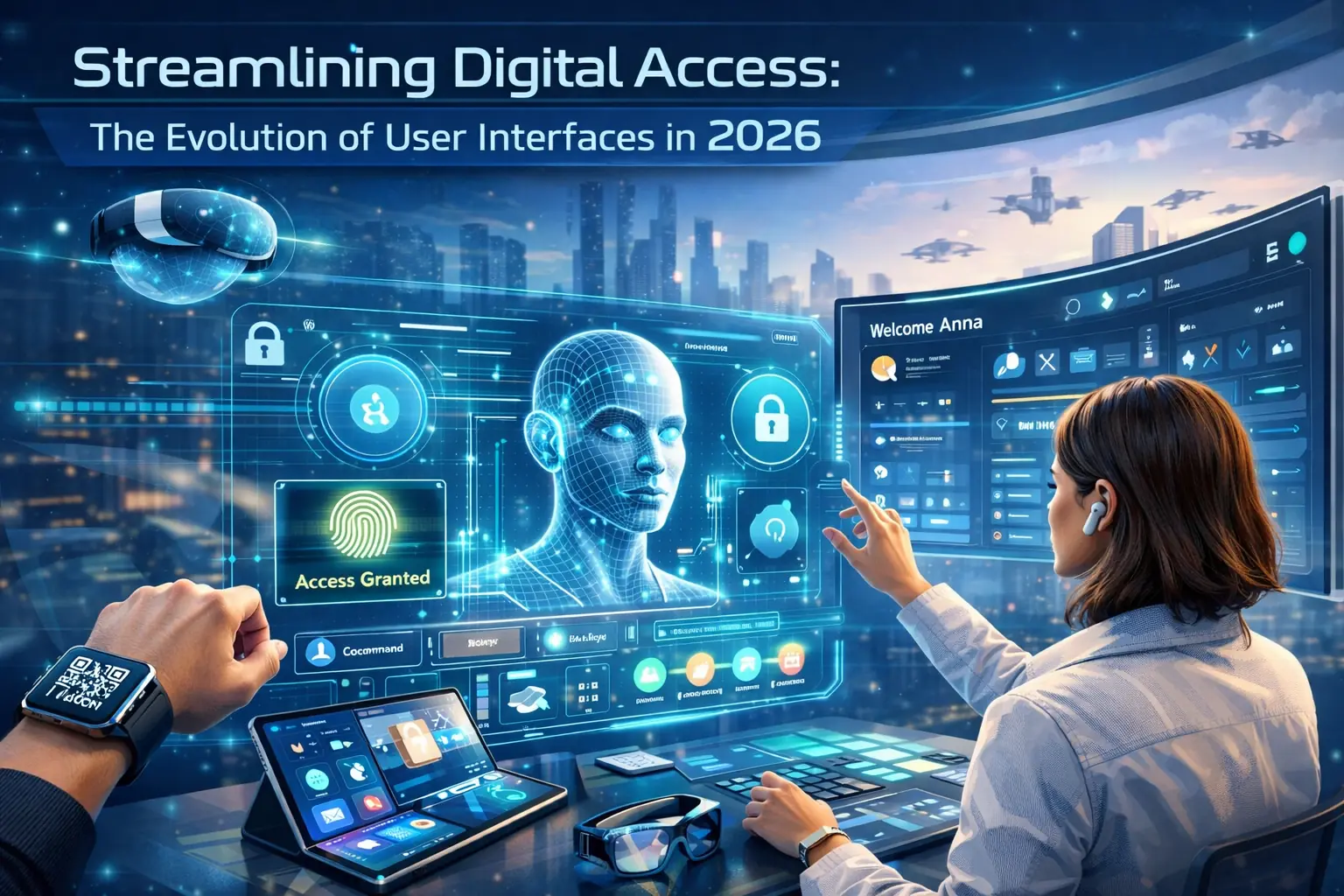
Streamlining Digital Access: The Evolution of User Interfaces in 2026
Introduction
In the modern digital age, the average internet user in the Philippines manages over 20 different active accounts—from mobile banking apps like GCash and Maya to social media platforms and digital entertainment portals. As our digital lives expand, the “gateway” to these services—the login page—has become the most critical touchpoint for user experience (UX).
The challenge for developers in 2026 is no longer just about building a working app; it is about reducing friction. Users demand instant access, but they also demand uncompromised security. This delicate balance between “ease of entry” and “data protection” is redefining how we interact with the web, turning the humble login screen into a battleground for user retention.
The Friction Problem: Why Speed Matters
Research consistently shows that 30% of users abandon a mobile app if the login process takes more than 10 seconds. In a fast-paced market like Manila, where the daily commute is long and attention spans are short, a heavy or complicated loading screen is a major deterrent.
This “cognitive friction” is the enemy of engagement. When a user has to reset a password or navigate a clunky CAPTCHA, they are likely to close the app entirely. This has pushed tech companies to strip away unnecessary code. The trend is moving towards “Lite” interfaces—clean, minimalist designs that load instantly even on 4G connections. We are seeing this philosophy applied across all sectors, from government portals to private entertainment hubs.
Infrastructure Challenges in the Archipelago
Designing for the Philippines presents unique challenges compared to Western markets. With an archipelago of over 7,000 islands, internet connectivity can be inconsistent. A login system that works perfectly in Makati on fiber internet might fail completely in a rural province on a spotty mobile data signal.
Developers are now optimizing their “handshake protocols”—the initial data exchange between the app and the server. By minimizing the data packets required to verify a user’s identity, apps can function smoothly even in areas with high latency. This “offline-first” mentality is what separates successful local apps from foreign competitors who don’t understand the local infrastructure.
Balancing Security with Convenience
However, speed cannot come at the cost of safety. With cyber threats evolving and phishing attacks becoming more sophisticated, the “Login” button is the front line of defense. The best platforms today utilize background encryption protocols (SSL/TLS) that protect user credentials in transit without slowing down the experience.
A strong example of this “Security-First” design can be seen in modern digital entertainment platforms. The Pinoy 365 login portal, for instance, has been noted for its streamlined architecture. It manages to authenticate thousands of concurrent users securely without the lag typically associated with high-traffic databases. This efficiency is crucial for maintaining user trust in an era where data privacy is paramount.
The Role of Mobile-First Design & Biometrics
Another factor influencing login architecture is the absolute dominance of mobile devices. Desktop-style forms with tiny text boxes are obsolete. Modern interfaces now feature large, thumb-friendly input fields and, crucially, biometric integration.
The adoption of fingerprint scanning and facial recognition (FaceID) has been a game-changer. It removes the need for users to remember complex alphanumeric passwords, replacing them with a unique biological key. For Filipino users, who often switch between Wi-Fi and mobile data, a login page must also be “connection-resilient.” It needs to handle network drops without forcing the user to re-type their credentials three times. Platforms that master this specific technical hurdle are the ones seeing the highest retention rates this year.
Compliance and The Data Privacy Act
Beyond the user experience, there is the legal landscape. The Data Privacy Act of 2012 has set a high standard for how personal information is handled in the Philippines. A login page is no longer just an entry point; it is a compliance checkpoint.
Modern login systems now often include “consent layers” and transparent data policies right at the start. Users are becoming more discerning tech consumers; they look for the padlock icon and the assurance that their data is encrypted. Platforms that fail to provide this visual assurance often see high bounce rates, as users are increasingly wary of unsecured connections.
The Future: Toward a Passwordless Ecosystem
Looking ahead, the industry is slowly moving toward a passwordless future. Technologies like Passkeys and biometric tokens are gaining adoption, promising to eliminate the “Forgot Password” button forever.
However, until these become universal standards across all Android and iOS devices, the optimized, secure login page remains the standard. For now, the benchmark for a quality digital service is simple: Can the user get in safely, in under three seconds, regardless of their location? If the answer is yes, the developers have done their job.